
Insights on running multiple industries on one platform — for the leaders who do.
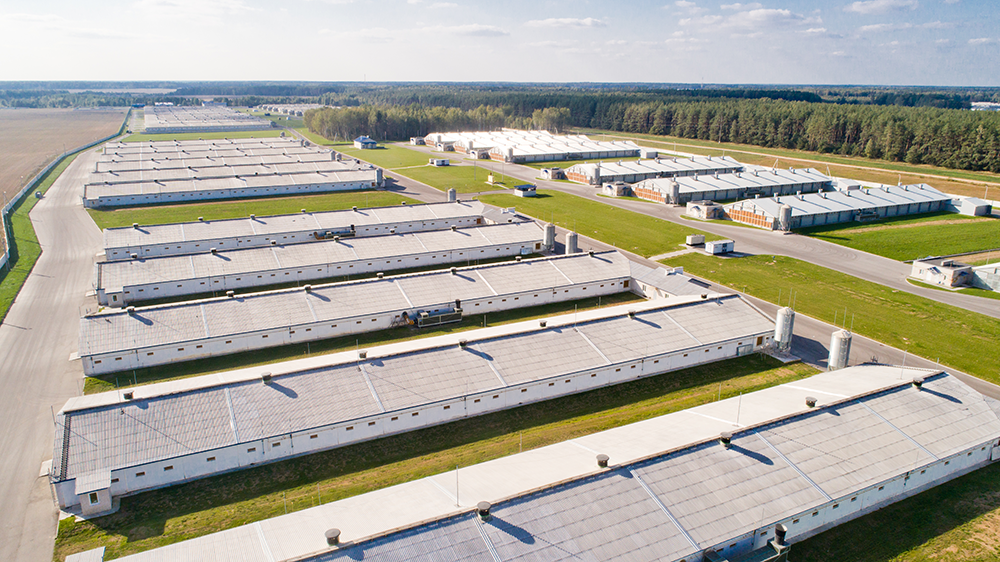
Industrial-scale agriculture is one of the hardest businesses to run on generic software, and the reason is structural. A plantation or integrated livestock operation is simultaneously a farm, a construction project, a manufacturing line, a logistics network, and a finance company extending terms to contract growers. Best-of-breed tools handle any one of these well but rarely talk to each other — so what sales sells, what operations manages, and what production actually produces drift apart.
That disconnect is expensive in agriculture specifically, because biological cycles do not wait for a reconciliation. A missed vaccination schedule, an unrecorded feed issuance, or an unmonitored contract-grower budget shows up in yield and margin long before it shows up in a report assembled after the fact.
Dimensions for Agriculture is built on Acumatica's cloud platform — unlimited user licensing, open APIs — to manage the full business lifecycle from land acquisition and development through harvesting, packaging, sales, and logistics. It is designed around the operations agribusiness actually runs:
• Poultry Farm Operations — monitor feed consumption, vaccination schedules, disease incidents, and flock performance in real time.
• Swine Operations — let contract growers track budget performance, report pests and diseases, and record activities and material issuances.
• Plantation Field Operations — keep infrastructure projects on schedule, monitor contractor delays, and evaluate project budgets end to end.
• Aquaculture Operations — record fish growth rates by location and compare targets against actuals to optimize productivity.
• Project Operations Management — track costs across materials, labor, services, and inventory to deliver projects on time and on budget.
The recurring theme across poultry, swine, plantation, and aqua is the contract grower and the project budget — the places where field activity and financial control meet. When feed conversion, harvest performance, and grower payments run on the same platform as costing and revenue recognition, monitoring stops being a monthly catch-up and becomes continuous visibility. Automated cost and revenue recognition and streamlined tax reporting with e-invoicing close the loop from field to financials.
For a conglomerate whose portfolio already spans real estate, financing, and facilities, agriculture is one more division that no longer needs its own island of software. That is the larger promise of the Dimensions suite on Acumatica: one platform across industries, and far less chaos for everyone who has to run them.

