
Insights on running multiple industries on one platform — for the leaders who do.
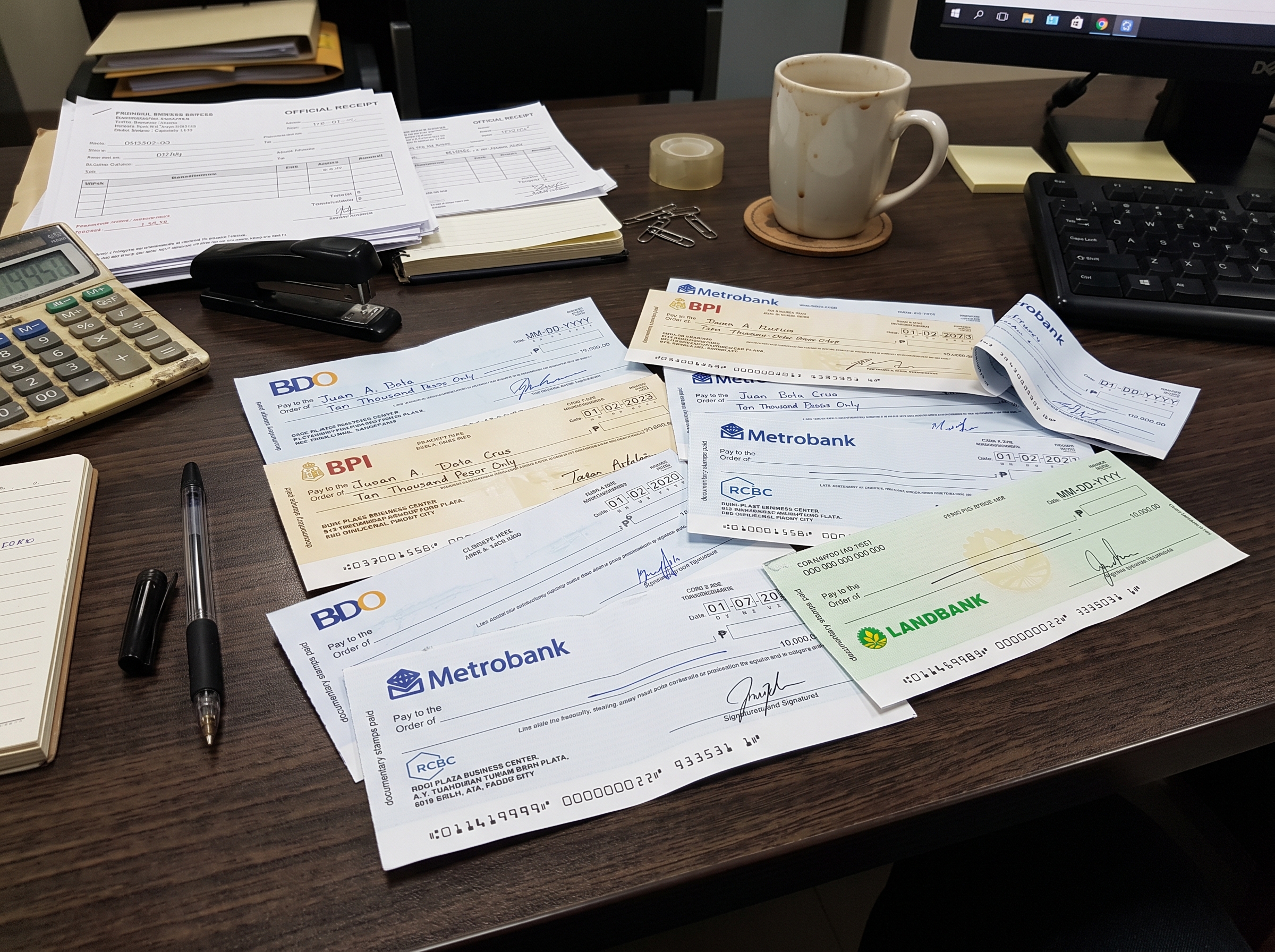
In much of the world, a post-dated check is a curiosity. In the Philippines, it is often how a deal is closed. A property buyer on in-house financing, a client on installment terms, a borrower on an amortization schedule — the agreement frequently comes with a stack of checks, each dated for a future month, that the collecting company must safeguard, deposit on the right day, and reconcile against the account.
Global ERP platforms have no native concept of a check dated three months out. So the checks end up in a physical drawer and a parallel spreadsheet, tracked by hand, deposited from memory, and reconciled long after the fact. It works until it doesn’t — a missed deposit date, a check that bounces unnoticed, a delinquency that surfaces weeks too late.
Dimensions treats post-dated check management as the core collections mechanism it actually is in the Philippine market, paired with delinquency management so the two work together:
• Warehouse and schedule — record every PDC against the customer and contract, with its due date, so nothing sits forgotten in a drawer.
• Deposit on time — checks surface for deposit on their dated schedule rather than relying on someone’s memory.
• Catch problems early — bounced or dishonored checks flow into delinquency handling, feeding statements of account, surcharges, and demand letters.
• Tie to the ledger — because it runs inside the ERP, a deposited check is a financial event, not a note to be re-keyed later.
A capability like this rarely appears on a global feature comparison — which is precisely why it matters locally. For real estate developers and financing companies whose entire collections model runs on post-dated checks, a system that handles them natively removes an entire category of manual risk. It is a small feature that quietly reflects a deep understanding of how Philippine business is actually done.

